
Stressed About Being Stressed? How Chiropractic Helps Your Nervous System Adapt
Short answer: stress itself is not the problem; a nervous system that cannot switch out of “fight or flight” is. Chronic stress tightens muscles, locks joints in the spine and keeps the body in survival mode, where healing, digestion and sleep are deprioritised. Chiropractic care does not remove your stress. It restores movement to the spine and reduces interference in the nervous system so your body can adapt to stress and recover, and heart-rate variability lets us measure whether it is working.
Your body’s two gears
Your nervous system has two main modes. Sympathetic, the “fight or flight” gas pedal, prepares you to act. Parasympathetic, the “rest and digest” brake, is where healing, digestion, immune function and sleep happen. A healthy system shifts between them all day long. The problem of modern life is not the stress, it is getting stuck in gear one.
Research has estimated that stress is a factor in the large majority of chronic conditions. You feel it as a jaw that never relaxes, shallow breathing, tension headaches, poor sleep, a stomach that never settles. A baby shows it as reflux, irritability, sleep issues or colic; a baby cannot say “I am stressed”, but their body can.
Where the spine comes in
Physical, chemical and emotional stress all create the same thing in the spine: vertebral subluxations, areas that have lost proper movement. The spine is the densest source of movement information the brain receives, so when segments stop moving properly the brain gets “bad data” and treats it as a threat. That keeps the sympathetic system switched on. The upper neck, where the vagus nerve, the main driver of the parasympathetic system, exits the skull, is especially important.
At its core, our care is about optimising neurological function by removing interference in the nervous system so your body can adapt better. We cannot eliminate your stress. We can absolutely help your nervous system handle it.
HRV: the report card
Heart-rate variability (HRV) is the variation in time between heartbeats. It is not your heart rate. A healthy, adaptable nervous system produces a variable rhythm; a stressed, rigid one produces a metronome. Low HRV is associated in the research with higher risk of cardiovascular disease, anxiety and poor immune function, and it is one of the best single measures of how well your body manages stress.
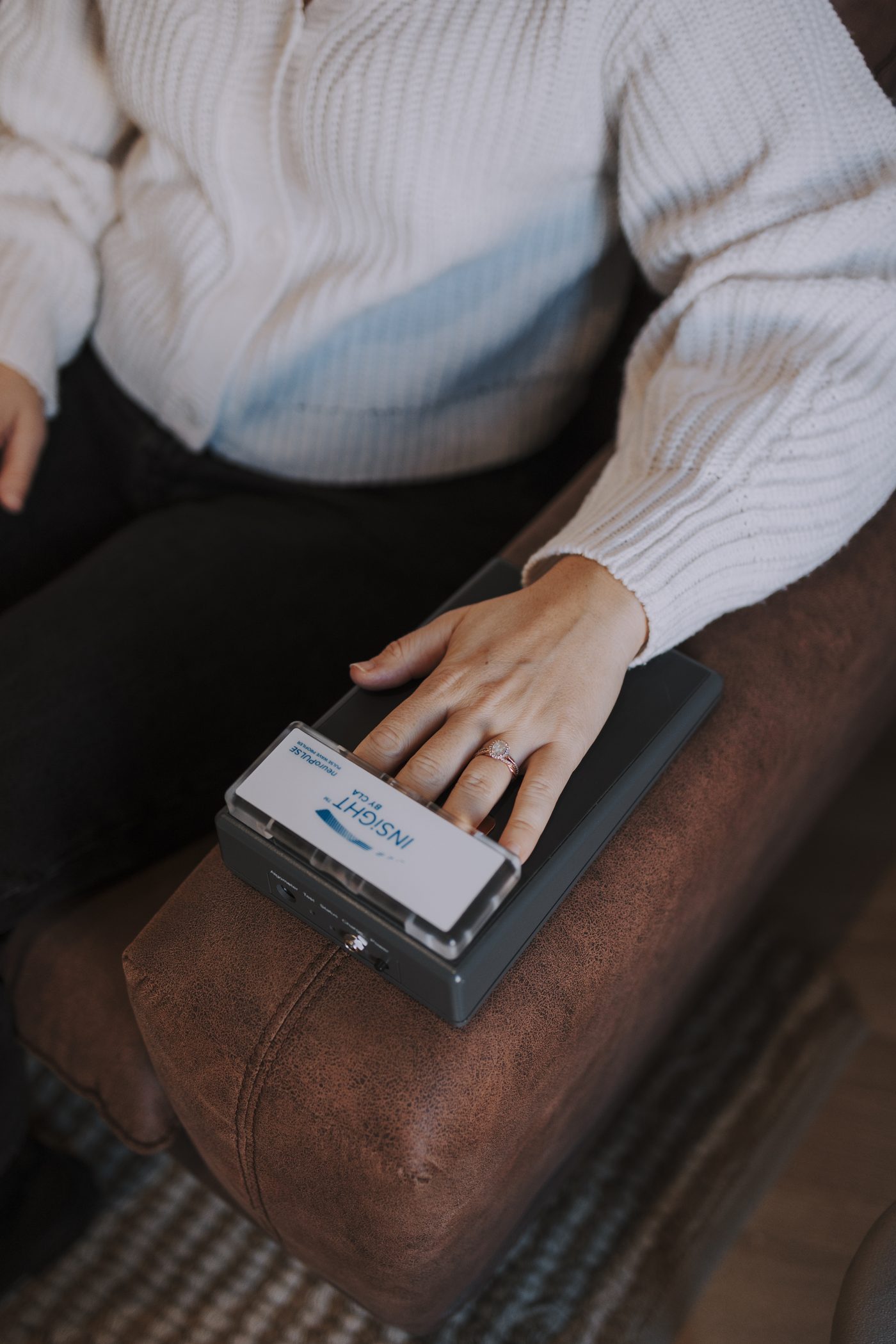
We measure HRV with the INSiGHT scan at your first visit and at every progress check, together with the thermal and surface EMG scans. A 2008 study by Welch and Boone found a measurable shift toward parasympathetic dominance after a specific adjustment; in plain words, the body moved out of stress mode. We see the same shift on our own scans over a plan of care.
What you can do this week
- Get adjusted, and keep the frequency in your plan, because each adjustment builds on the last.
- Move: walk, stretch, change position at your desk every 30 minutes.
- Breathe slowly through the nose for two minutes when you notice the jaw clench.
- Protect sleep; it is when the parasympathetic system does its work.
The breathwork and the cold plunge are great. But if your spine is locked up, you are filling a bucket with a hole in it. Fix the hole first.
Frequently asked questions
Can chiropractic cure anxiety or stress? No, and we do not claim that. What it does is help the physical side of stress, the locked spine and the stuck nervous system, so your body can adapt and recover.
Can I see my HRV? Yes. Your scans are part of your Report of Findings and are repeated every few months so you can see change.
How fast do people notice a difference? Many notice better sleep and less tension within the first weeks. Measurable change on the scans usually takes a few months of consistent care.
Feel like you or your child are simply not adapting to life’s daily stressors? Book an assessment and let’s measure it.