
Colic, reflux and a baby who always looks one way
A baby cannot say "I am stressed", but their body can: inconsolable evening crying, spitting up after feeds, gas, constipation, difficulty settling, or a head that always turns to the same side. These are signs that a newborn nervous system is having trouble adapting after birth. Gentle pediatric chiropractic care, with fingertip pressure only, checks the upper neck and spine and helps a little body come out of that stress state.
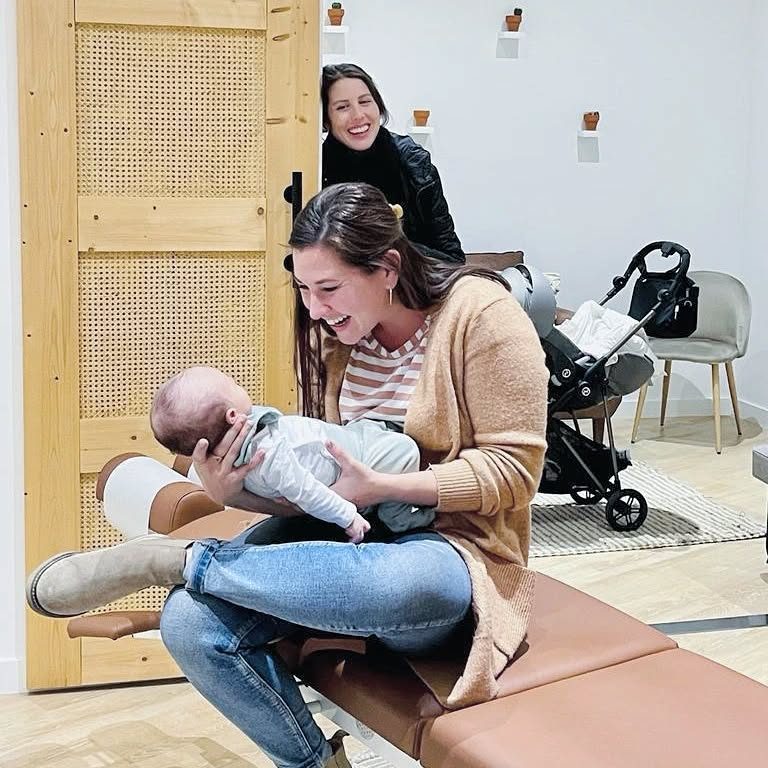
What parents bring their baby for
- Colic-type crying, especially in the evenings
- Reflux and frequent spitting up
- Gas, constipation or a tummy that never seems comfortable
- A baby who prefers turning the head one way, or dislikes one side when feeding
- Difficulty latching or feeding well
- Trouble settling and sleeping
- A long, very fast, assisted or caesarean birth
Why the neck and the tummy are connected
Birth puts a lot of force through a baby's head and neck. The upper neck is where the vagus nerve, which regulates digestion and calm, exits the skull. When that area is restricted after birth, the nervous system can stay in "fight or flight": a tense, unsettled, gassy baby. A gentle check and, where needed, a fingertip adjustment help that area move and the system settle.
A randomised trial of chiropractic care for infant colic (Miller and colleagues, 2012) reported a meaningful reduction in crying hours in the babies who were adjusted. We share the research honestly and alongside your pediatrician's care, never instead of it.
What a visit looks like
A relaxed conversation about the pregnancy, birth and feeding. A gentle check of the spine, neck and head turning, usually in your arms or while feeding. Adjustments with the pressure you would use to test a ripe tomato; babies often sleep through them or smile. Then a clear explanation and a plan; babies usually need far fewer visits than adults.
Dr. Kelli Turelli is trained in pediatric care through the International Chiropractic Pediatric Association (ICPA) and teaches pediatric care at the Barcelona College of Chiropractic. We do not diagnose or treat diseases. We assess the spine and nervous system, adjust where we find restriction, and refer you to the right specialist whenever something needs another set of eyes.
Updated: · Dr. Kelli Turelli, DC & Dr. Francisco Turelli, DC
Frequently asked questions
Can chiropractic help a baby with colic?
Many parents see calmer, more settled babies after gentle pediatric care, and a randomised trial has reported reduced crying time. We check the upper neck and spine and work alongside your pediatrician.
Is it safe for a newborn?
Yes. Pediatric adjustments use fingertip pressure only, no twisting or cracking, adapted to the baby's age and size. Dr. Kelli is ICPA-trained in pediatrics.
What about torticollis (head always turned one way)?
We assess the upper neck and how the head turns, and help restore movement gently. The first weeks and months are the best window. We coordinate with your pediatrician or physiotherapist where needed.
When should we come?
As early as possible. Most of our newborns are checked in the first 5 to 10 days of life, and Dr. Kelli does home visits for families who birth at home.