
"But I Feel Fine Now": Why No Pain Isn't the Same as Being Well
Short answer: pain is the loudest thing your body says, but it’s a small part of what your nervous system carries. Pain signals travel on thin, slow nerve fibres. The heavy, constant traffic from your spine to your brain is about movement, position and coordination, and it travels on big, fast fibres. Pain works like a smoke alarm: it tends to switch on late and switch off early. Feeling fine is good news, but it isn’t proof that everything underneath is working as well as it could.
It’s the sentence we hear most often a few weeks into care: “I feel great, so I think I’m done.” Sometimes that’s exactly right. But it’s worth understanding what pain is, and what it isn’t, before you decide.
Two kinds of traffic on the same road
Your spinal cord carries information in both directions, along separate pathways. Two matter here:
- Pain and temperature travel mostly on small fibres (called A-delta and C fibres) up a pathway called the spinothalamic tract. C fibres in particular are thin, carry no insulation and are slow.
- Position, movement and coordination, what scientists call proprioception, travel on large, heavily insulated, fast fibres up the dorsal columns and the spinocerebellar tracts. This traffic never stops: every time you sit, stand, turn your head or take a step, your joints and muscles report to your brain.
So most of the conversation between your spine and your brain is not about pain at all. It’s about how you move and hold yourself.
Why pain is a smoke alarm, not a status report
Pain is loud precisely so that you can’t ignore it. But like a smoke alarm, it’s built to go off once something has crossed a threshold, not to give you a running report on how well the house is wired.
That’s why symptoms often show up late, after a problem has been building quietly for a while, and fade early, once things have settled enough to drop below the threshold. When your pain goes, the alarm has gone quiet. Whether the system underneath has fully adapted is a separate question.
What we look at instead of pain alone
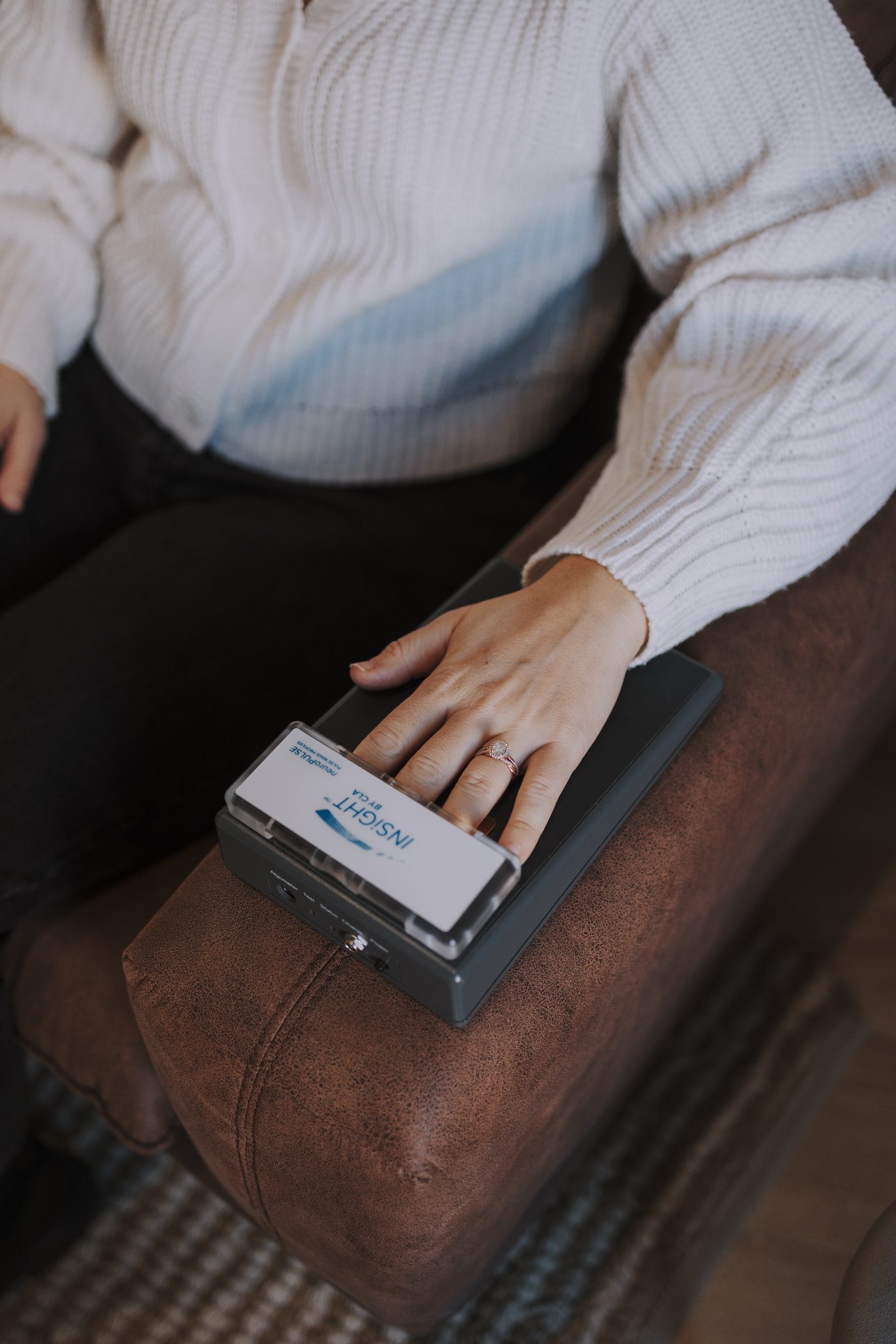
This is why we don’t measure progress only by how you feel. At your re-assessments we look at how your spine moves, how your posture has changed, and what the INSiGHT nervous-system scan shows about muscle tone and heart rate variability, a marker of how well your nervous system adapts to stress. Then we sit down with you and decide the next step together. Sometimes that’s fewer visits. Sometimes it’s a few more weeks before spacing out. It’s always your decision.
The honest part
- Pain matters. Getting you out of pain is a real and worthwhile goal, and for many people it’s the main one.
- Feeling fine is not a warning sign. Most people who feel well are well. The point is only that pain alone is an incomplete measure.
- We can’t promise that continuing care prevents future problems. What we can do is show you what we measure, so you’re deciding with more information than pain alone.
For how often people choose to keep coming once they feel better, see how often should you get adjusted.
Frequently asked questions
If I don’t have pain, do I still need a chiropractor? Not necessarily. Many people choose to continue care because they like how they move and feel, and because pain alone doesn’t show how well the nervous system is working. A re-assessment is the best way to decide.
Why did my pain go away before my spine moved better? Pain switches off once things drop below a threshold, which can happen before movement and posture have fully adapted. That’s normal, and it’s why we re-check more than symptoms.
What does the nervous-system scan measure? The INSiGHT scan measures muscle activity along the spine, skin temperature patterns and heart rate variability. It shows how your nervous system is working, not just where it hurts.
Will you pressure me to keep coming? No. We show you what we find and recommend a plan. Whether you continue, space out or stop is your call.
The sources
- Purves D, Augustine GJ, Fitzpatrick D, et al. Neuroscience. Sinauer Associates. The chapters on the somatic sensory system and on pain (the dorsal column–medial lemniscal and anterolateral pathways). A standard university neuroscience textbook.
Wondering what’s going on underneath, pain or no pain? Book an assessment.